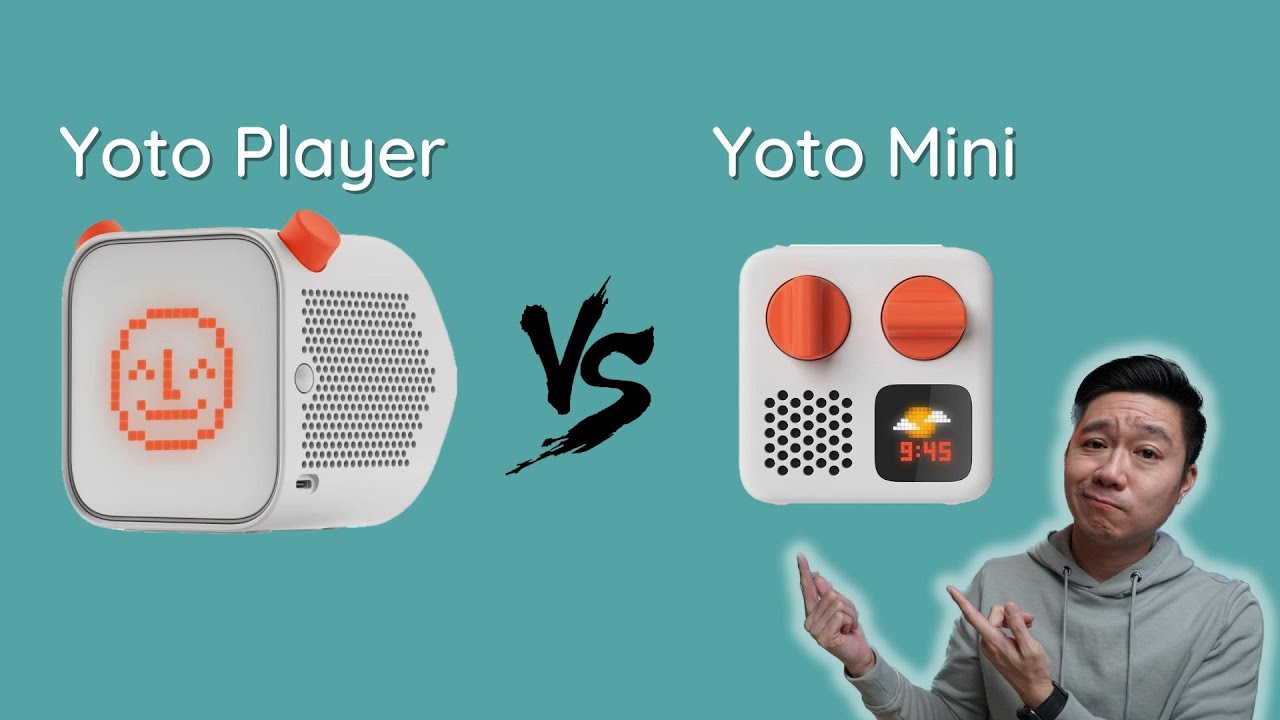
Yoto Mini vs Yoto Player: Which One Should You Buy?
Deciding between the Yoto Mini and the Yoto Player really comes down to your family’s primary use case—portability versus shared space. There isn’t a clear winner; it’s more about matching the device specs to where you plan on using it most often, whether that’s during travel or in a busy playroom setting at home.
How Much Does the Price Difference Impact Buying Decisions?
The initial cost is one of the first things noticed when comparing the two units.
- Yoto Mini: This model is more affordable at $69.99.
- Yoto Player (3rd Generation): This has a higher price point, listed at $99.99.
Is Portability More Important Than Sound Quality?
The most obvious physical difference between the two players relates directly to size and how they are meant to be carried.
Yoto Mini: The Compact Travel Companion
As the name suggests, this unit prioritizes being small and lightweight.
- Key Benefit: Excellent for portability; it’s small enough for little hands to carry effortlessly, making it ideal for road trips or flights where luggage space is tight.
- Speaker Profile: It features a smaller speaker optimized for personal listening, resulting in good sound quality suitable for individual use.
Yoto Player (3rd Generation): Built for Shared Spaces
This unit is physically larger than the Mini, though it does come with a carrying case that includes a solo handle assist.
- Key Benefit: The size allows it to house larger stereo speakers on both sides, delivering a richer, louder sound perfect for group settings like playdates or family time.
- Consideration: Because of its larger build, it is noted as being quite big and may not fit into a child’s backpack as easily as the Mini.
How Do The Batteries Compare For All-Day Play?
Battery life offers another significant functional difference when comparing the two models side-by-side.
- Yoto Player: This unit boasts a larger internal battery, rated for up to 24 hours of listening.
- Yoto Mini: Its runtime is rated for 14 hours on newer versions (or 10 hours if using the older version that requires the Smart Cable).
Other Tech Specs to Consider
Both players utilize a USBC charging port, which simplifies travel by allowing them to charge with most modern smartphones. However, the Yoto Player has two additional convenient features:
- Wireless Charging: It supports Qi wireless charging, meaning you don’t need an extra puck for charging if it fits inside its case.
- Okay to Wake N NightLight: The Yoto Player includes a light feature that can change color (e.g., green) to signal when it is appropriate for a child to get out of bed.
What Kind of Experience Do They Provide Sonically?
In direct comparison regarding audio output, the difference in sound power was noticeable during testing.
- When comparing the two with the same track at 50% volume, the Yoto Player produced a significantly louder and richer stereo sound compared to the Mini’s personal listening profile. Kevin noted that while both work for him personally, the Yoto Player’s output is much more robust.
The Final Verdict
The choice hinges entirely on your primary environment:
- Choose the Yoto Mini if portability and compactness are your absolute top priorities, especially if you anticipate frequent travel or need a device that fits easily into small bags.
- Opt for the Yoto Player (3rd Generation) if shared listening experiences, superior volume, and advanced features like wireless charging or integrated nightlights are more important to your family’s setup (e.g., using it in a main playroom or bedroom).
Disclaimer: Some of the links below are affiliate links, meaning I may earn a small commission at no extra cost to you if you decide to purchase.
Where to buy

As an Amazon Associate I earn from qualifying purchases. Some links on this page are affiliate links — I may earn a small commission at no extra cost to you. Prices shown are accurate as of 2026-10-05 and may change.