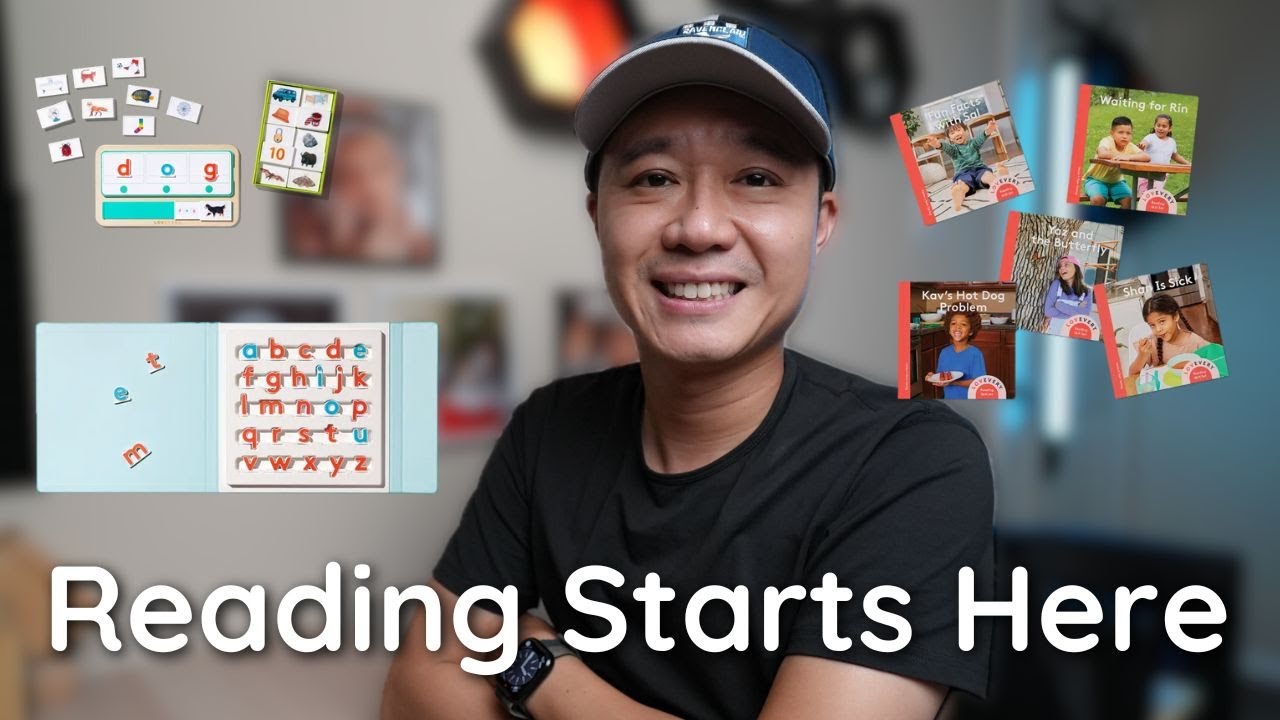
Lovevery Reading Skill Set Part 1: A Lesson Plan
The Lovevery Reading Skill Set Part One is a fantastic collection of tools, but its open-ended, Montessori-inspired nature means it isn’t a traditional, step-by-step curriculum. Instead of a review of every item, this post outlines the flexible, multi-area routine built around the set—a setup designed to guide reading development while remaining responsive to your child’s actual pace.
How is the Lovevery Reading Skill Set Part One Structured?
The set organizes learning into four broad areas of early reading development, rather than strict levels or steps. The approach involves rotating activities based entirely on what the child is ready for, which keeps the process engaging and stress-free.
1. Sound Play: Building the Foundation of Listening
This initial area focuses purely on training the ear for reading, independent of letters or worksheets.
- Rhyming Leaves: Starting here involves matching rhymes (e.g., “What rhymes with cats?”). The goal is listening for patterns, which is the actual foundation of reading.
- Syllable Race Game: Kids practice clapping out words. This helps them see that long words are simply composed of smaller, manageable parts.
- Compound Words Cards: This simple activity lets children slide two words together to make one. It teaches structure and early blending without needing letters.
- Follow the Sound Maze: This is noted as one of the strongest tools. Children practice isolating the first or last sound in a word by tracing a path through a maze based on that specific sound (e.g., tracing for the initial ‘M’ in ‘map’).
2. Introducing Letters: Connecting Sound to Symbol
The key insight here is that letters should be introduced after the sound foundation is solid, which the set supports naturally.
- ABCs with Mr. Z: This book is used to focus on letter sounds, not just letter names. The routine involves pointing to pictures and exaggerating the sound.
- Letterase Beehive: This book is highlighted as surprisingly important because it helps children recognize both upper and lowercase letters—the way they appear in real books.
- Wooden Letter Sound Blocks: These provide a tactile way to reinforce the connection between the sound and the symbol.
- Goal: The focus remains relaxed—building familiarity and connecting what the child hears to what they see, avoiding rote memorization pressure.
3. Word Building: The Early Decoding Zone
Once sounds and letters start linking, the focus shifts to assembling actual words.
- Movable Alphabet: The routine involves building simple CVC words (like “cat” or “sun”) and sounding them out together. The process itself is the practice, even when mistakes are made.
- Spell and Check Slider: This tool gives children a sense of self-correction when they build a word and slide the panel over to check it. This builds confidence and makes blending feel like a game.
4. Storytelling and Reading Confidence: Comprehension Tools
These activities build the skills necessary to be a confident reader, going beyond just phonics.
- Wordless Book: The family takes turns co-creating the story, which helps build comprehension, vocabulary, and sequencing skills.
- Turn-Taking Books: These are perfect for easing into reading. The routine involves the adult reading an adult part, while the child reads a simple, predictable child part—a form of shared reading that isn’t overwhelming.
How Does the Routine Look Week-to-Week?
The process is highly adaptable; there is no mandatory order. A suggested flow involves:
- Choosing one or two sound play activities.
- Incorporating one letter activity.
- Doing a little word building.
- Ending the session with a book.
Once your child is confident with sound blending and early decodables, you can move to the next stage in our Lovevery Reading Skill Set Part 2 review.
The core principle is responding to the child’s interest and readiness. The entire setup is designed around “freedom within structure,” meaning parents are rotating through meaningful experiences rather than climbing a rigid staircase.
The Final Verdict
The Lovevery Reading Skill Set Part One is an incredibly rich, comprehensive toolkit that provides a flexible framework for early reading development. It shines because it doesn’t force a rigid curriculum; instead, it guides parents to build a self-directed routine that moves from pure sound awareness to symbol recognition, and finally to word building. If a parent prefers a highly structured, linear path, the open-ended nature might feel confusing initially, but for those comfortable with a Montessori-inspired, play-based approach, it is a powerful resource.
Disclaimer: Some of the links below are affiliate links, meaning I may earn a small commission at no extra cost to you if you decide to purchase.
Where to buy
Some links on this page are affiliate links — I may earn a small commission at no extra cost to you.